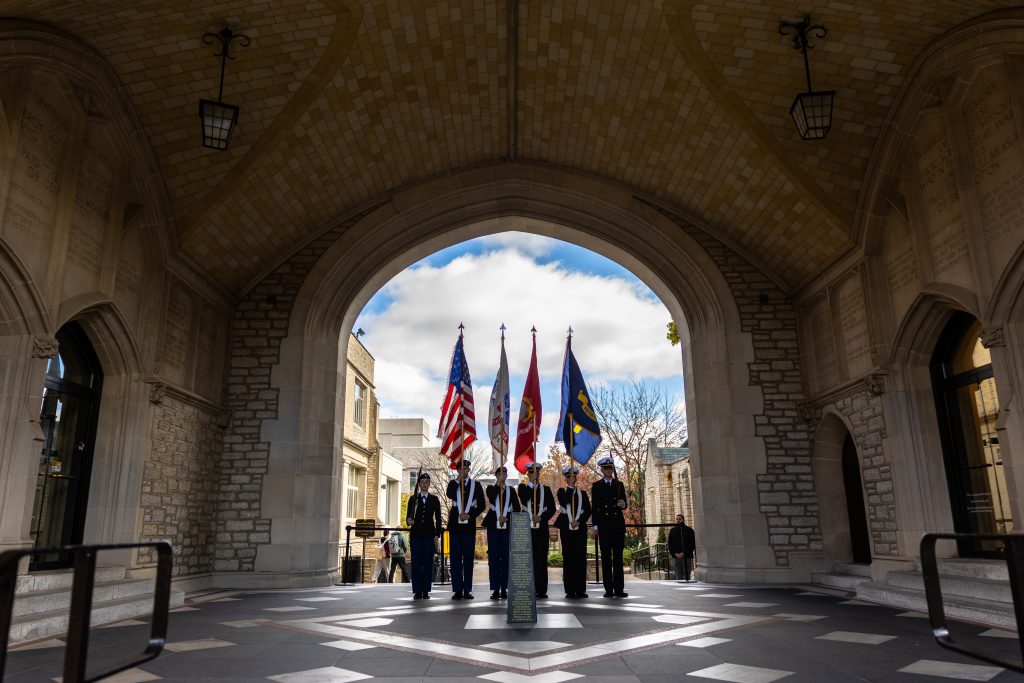
Memorial Student Union
Where Tradition Meets Today
Connecting Mizzou's past & present
Memorial Student Union stands as one of Mizzou’s most iconic landmarks. It is a place where campus life and university history intersect.
Opened in 1926 and completed in phases over several decades, it was originally envisioned as both a student gathering space and a living memorial to alumni who lost their lives in World War I.
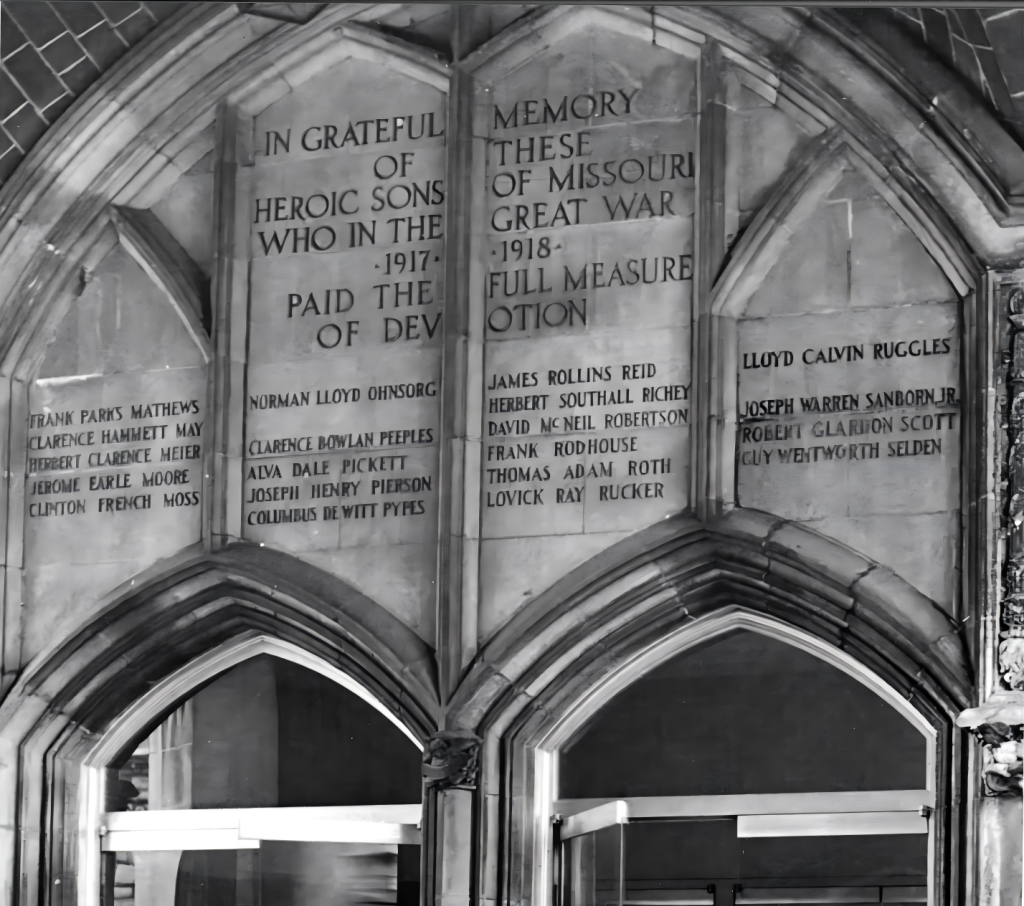
Built in a Collegiate Gothic style, the building is defined by its limestone façade, soaring arches and central tower — an enduring symbol of the University of Missouri. Within its walls and beneath the tower archway, the names of fallen students are inscribed, reinforcing the building’s role as a place of reflection and remembrance.
Memorial Student Union continues to serve as a vibrant campus hub, offering spaces to study, meet, dine and host events. At the same time, its history and traditions remain deeply woven into the student experience. It’s a space where community, memory and everyday life come together.
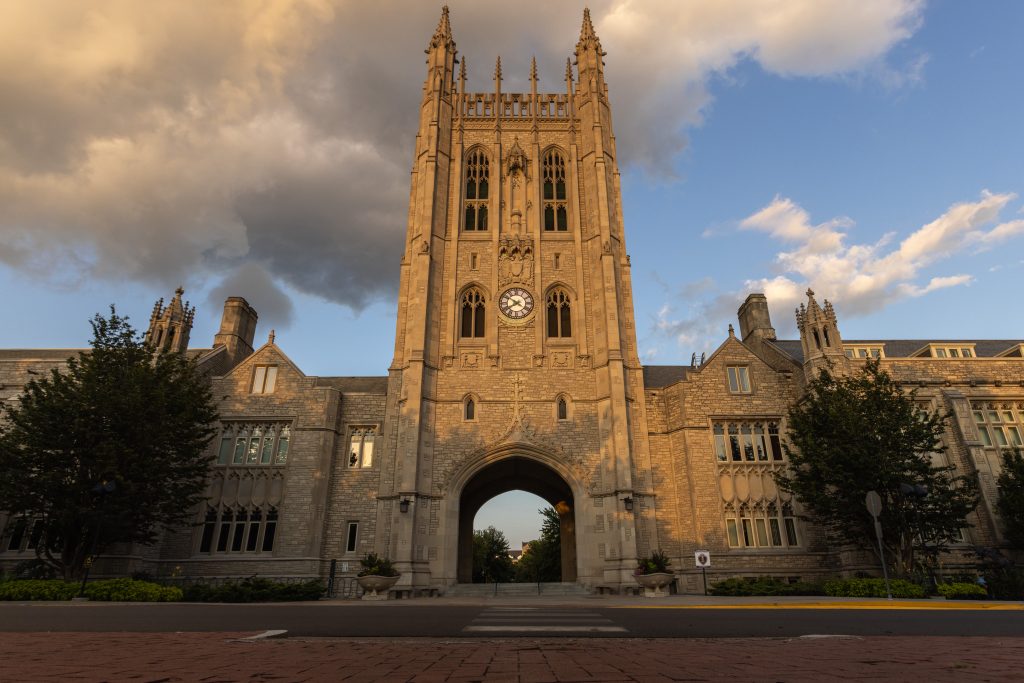
1916: A Union for Campus Life
The University of Missouri began planning a new student center that would serve as a gathering place for students and alumni. Originally known as the Missouri Student Union Building, the project was intended to strengthen campus community and support student life. As plans developed, world events would soon give the building a deeper purpose.
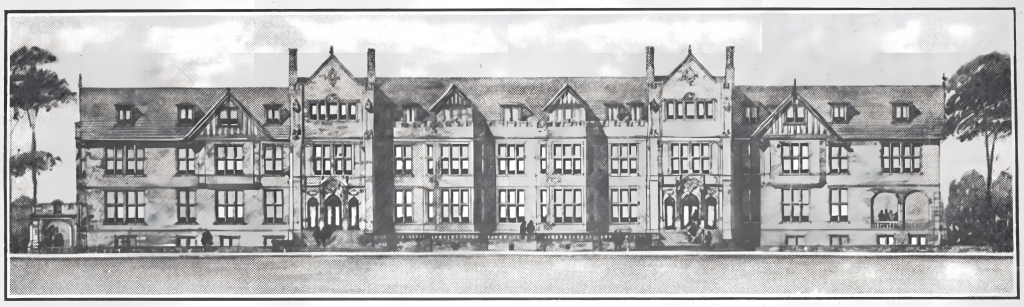
1918-19: From Student Union to Memorial
World War I transformed the project’s mission.
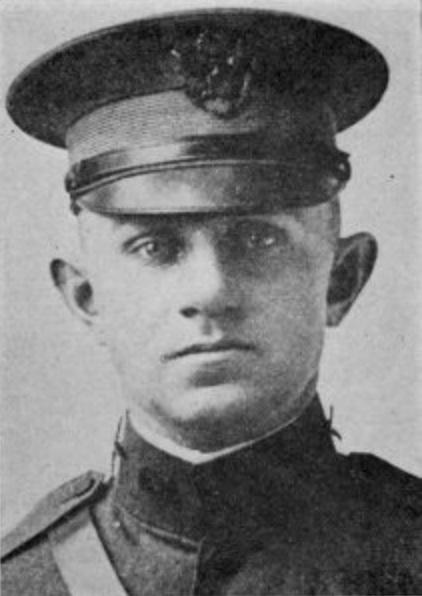
Among those who served our country was Robert McGhee “Peaches” Graham, a Mizzou graduate from the College of Agriculture. While serving overseas, Graham and fellow soldiers wrote The Memorial Tower, a poem urging the university to honor fallen students with a tower whose spires would point toward heaven and preserve the memory of those lost in war.
Graham was killed in action near St. Pie, France, on July 27, 1918, before seeing his vision realized.
At the 1919 commencement ceremony, Graduate School Dean Walter Miller read Graham’s poem and proposed it as the model for the new building. The university embraced the idea, transforming the planned student union into Memorial Union and incorporating a memorial tower into the design. The poem would later influence the naming of Memorial Stadium, extending the campus’s culture of remembrance beyond the Union itself.
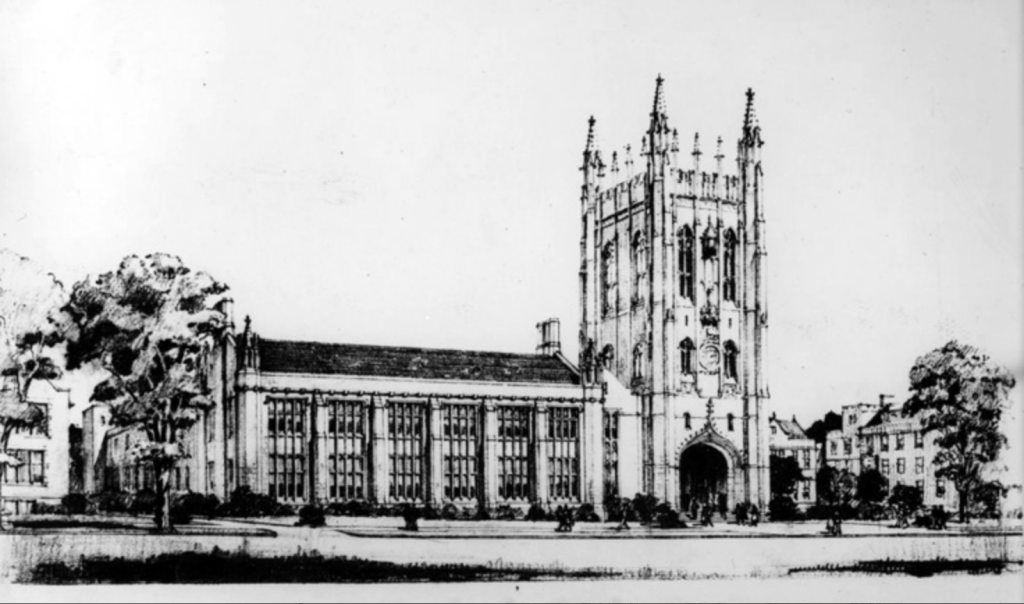
The Memorial Tower
By Robert “Peaches” Graham and his buddies
Build ye for us an ashlar tower
Four square, with high borne spires;
We ask no more, who died, mayhap in vain.
Braving the blasts of Hate’s Hell-fires.
Build ye for us a rough-hewed tower
With spires that point to Heaven and God;
Such our fate befits, who died
Nor winced neath War’s hot chastening rod.
Build not for us “Memorial Halls,”
Where joy-filled crowds shall dance and sing
Neath War-sad trophies hung ’round the walls,
Thoughtless of us, and pangs of battle’s sting.
Build ye for us a Stadium grand
To view thy school-days’ mimic wars;
Who traffics with our fearful fate
Degrades a holy cause.
Build ye for us a “sacred” shaft,
With spires that point to Heaven and God;
‘Tis all we ask, who died—
Who fell neath Hell’s death dealing rod.
And ye who thread the “Needle’s Eye,”
In base of this rough shaft,
Salute the shades enshrined here;
We, for you, have gall and wormwood quaffed.
1921: Fundraising & Groundbreaking
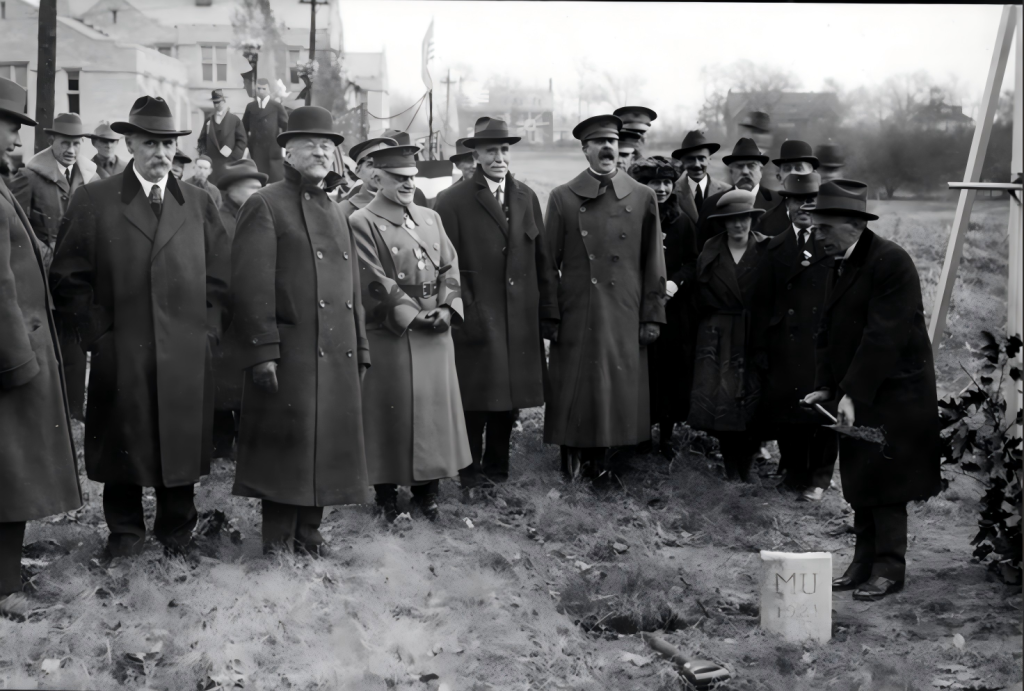
In 1921, the university launched a major fundraising campaign to construct Memorial Student Union as a tribute to alumni who died in World War I.
Students, alumni and supporters pledged contributions through a campus-wide fundraising effort. Acting President Walter Miller even declared March 25 a student holiday so the campus could devote itself entirely to raising funds. By day’s end, more than $162,000 had been pledged, and donations eventually exceeded $238,000.
With funding secured, ground was broken for the Memorial Student Union in November 1921.
1922-26: Building Memorial Tower
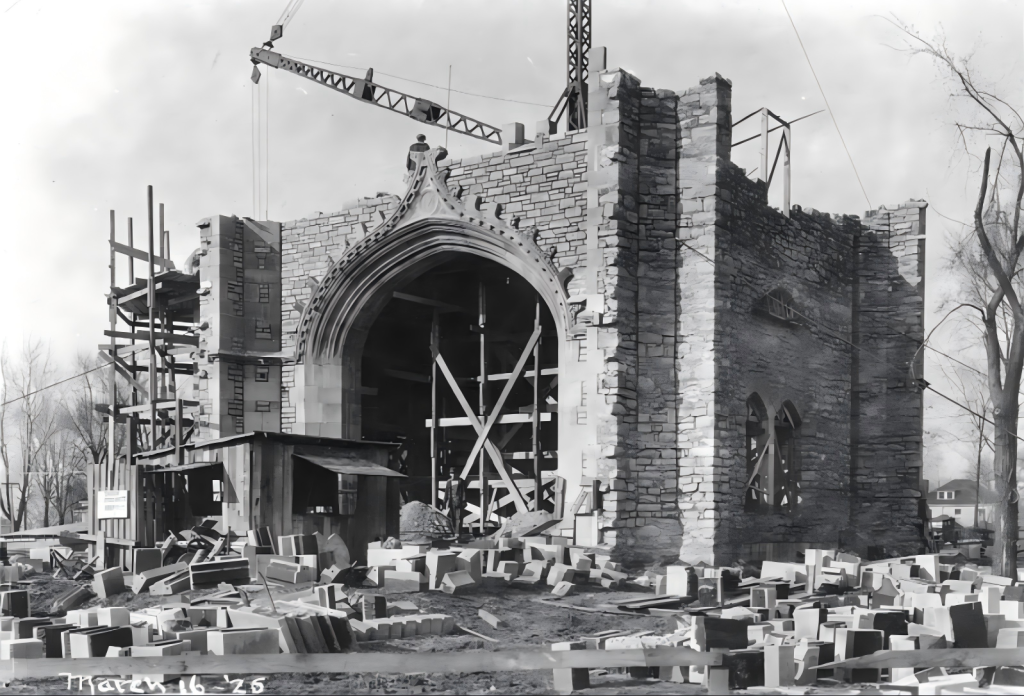
Construction of the Memorial Student Union Tower progressed steadily over four years. Piece by piece, limestone walls, arches and soaring pinnacles transformed Graham’s vision into reality.
As the structure rose above campus, it became both an architectural landmark and a powerful symbol of remembrance for the university community.
Nov. 20, 1926: Tower Dedication
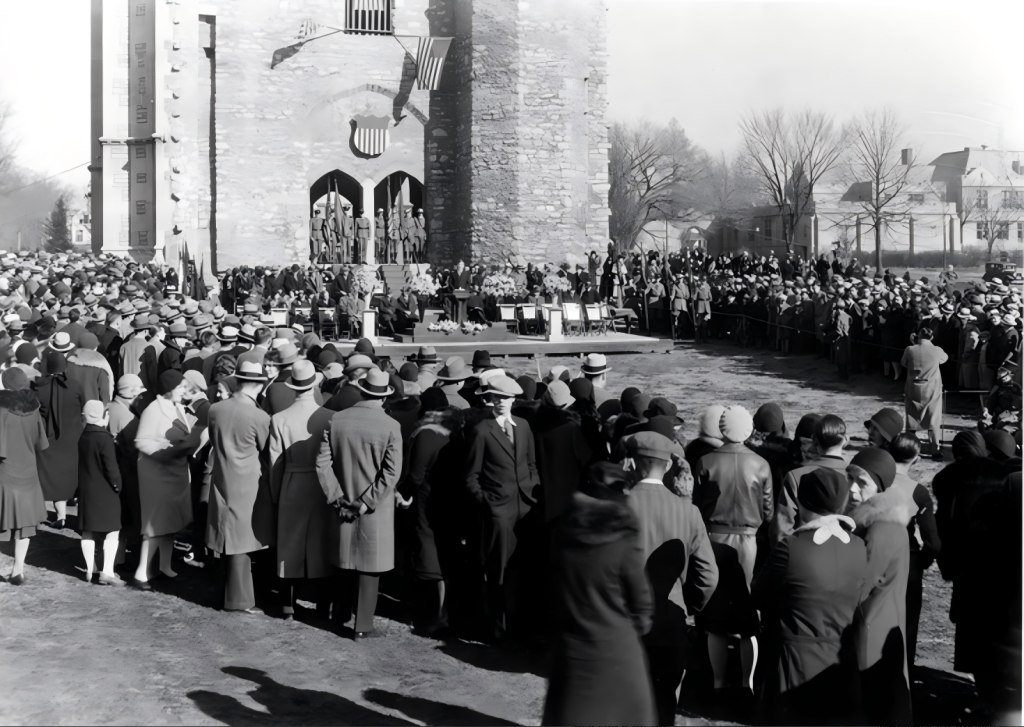
During Homecoming 1926, the Memorial Student Union Tower was formally dedicated as a memorial to University of Missouri alumni who died in military service.
The tower’s archway bears the names of 117 alumni who died in World War I. Four stone figures of Army soldiers and Navy sailors stand at the corners with bowed heads, creating a space intended for reflection and remembrance.
The dedication established the tower as the symbolic heart of Memorial Student Union and one of the university’s most significant memorial spaces.
1926-46: A Living Memorial
For two decades after its completion, the Memorial Student Union Tower stood as both a campus landmark and a place of remembrance.
Traditions developed around the memorial, including graduating seniors placing a wreath in the tower arcade to honor fallen servicemembers. The practice continues today through annual wreath-laying ceremonies. Visitors also are encouraged to remove their hats and speak quietly when passing through the memorial archway.
Although the tower was complete, the larger vision for Memorial Student Union remained unfinished.
1946-52: The North Wing Expands the Vision
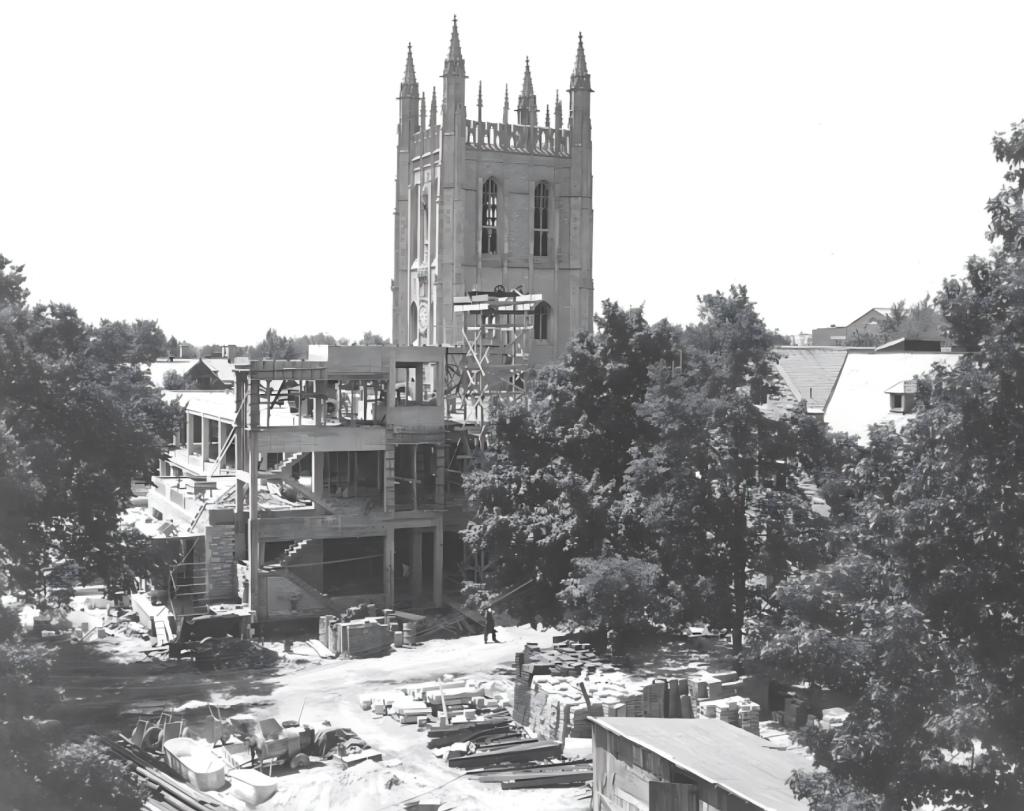
The original 1920s design called for a central tower flanked by two wings. Reflecting the social norms of the era, the wings were originally envisioned as separate activity spaces for men and women.
Progress on the larger project was delayed by the Great Depression and World War II. After the war, however, rising enrollment and increased demand for student services renewed momentum for expansion.
In 1946, the Missouri legislature approved financing for recreational and student facilities at the state’s public universities. Construction of the North Wing followed, with the cornerstone laid in 1950.
The North Wing officially opened in September 1952 at a cost of more than $2 million. Approximately $300,000 came from state appropriations, while the remainder was funded through bonds and private support.
The addition transformed Memorial Student Union from a primarily commemorative landmark into a fully functioning student center that provided space for meetings, studying, social gatherings and student organizations.
Its memorial mission also expanded. While the tower commemorated World War I, a plaque near the North Wing entrance honors 338 University of Missouri students who died in World War II.
1958-59: A.P. Green Chapel
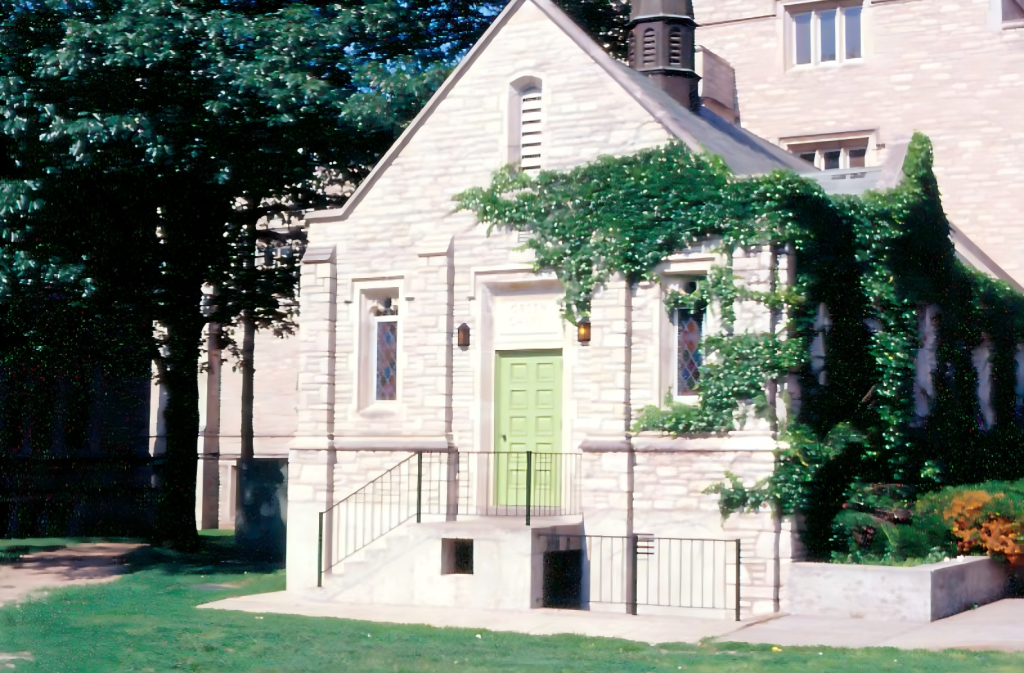
Memorial Student Union gained another distinctive feature when A.P. Green Chapel was constructed on the building’s east side as a gift from the Allen P. and Josephine B. Green Foundation.
Named for Missouri businessman and philanthropist Allen Percival Green, the chapel introduced a more intimate architectural experience within the larger complex. Designed as a non-denominational space, it offers a place for reflection, meditation, prayer and remembrance while continuing to host weddings, memorial services and other ceremonial events.
1930-63: Completing the Original Plan
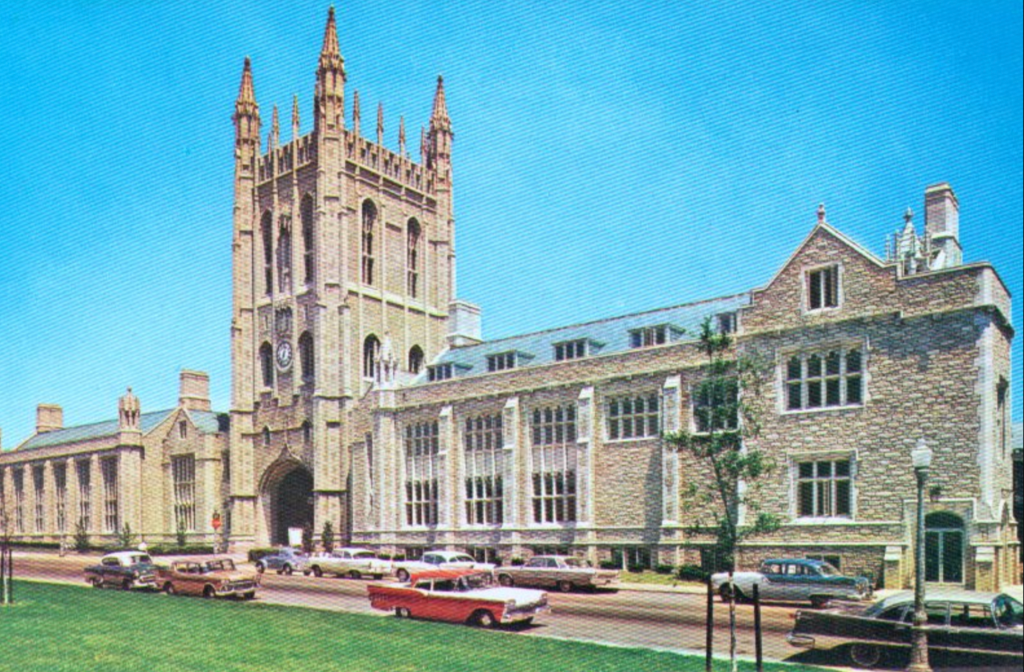
Construction of the South Wing had begun in 1930 but was delayed for decades by the Great Depression and World War II.
The project was finally completed in 1963, fulfilling the vision first proposed in the 1920s: a central memorial tower framed by two wings.
With the completion of the South Wing, Memorial Student Union reached its full architectural form for the first time.
1963-Present: The Heart of Campus
Since its completion, Memorial Student Union has served as both a memorial and a vibrant center of campus life.
Students study, meet, attend events and gather in its lounges, terraces and meeting spaces. At the same time, the building continues to honor generations of Mizzou alumni who served and sacrificed in times of war.
Today, Memorial Student Union stands as a rare combination of memorial, student center and campus landmark, connecting daily university life with a lasting tradition of remembrance.